Park's Land 42-Life of Pi
2025 Oil on canvas 162.2 x 130.3 cm
Provenance
Artist Collection, 2026
Exhibitions
2025《Rebellious possibility》, Yeol Jeong Gallery, Seoul
About The Work
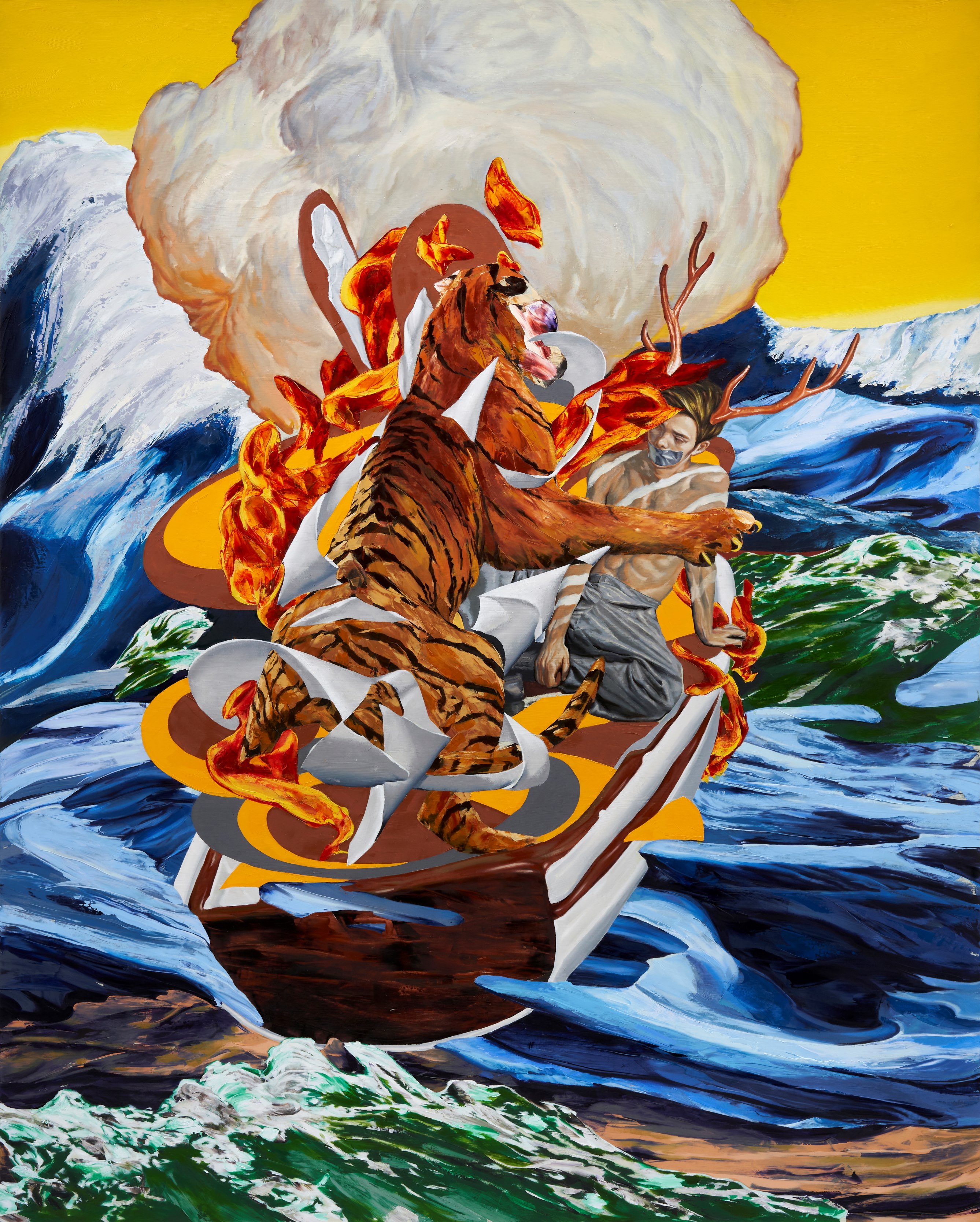
This work takes its motif from the film “Life of Pi”. The unstable relationship depicted in the film—in which the human figure is both the one who feeds the tiger and, at the same time, a potential prey—reveals that power and survival are not fixed states. I sought to translate this recurring reversal of roles into pictorial form.
The tape covering the figure’s mouth symbolizes a condition in which one cannot define the situation through language or offer resistance. It signifies the moment when the inability to speak becomes the loss of subjectivity itself. The horns attached to the figure’s head and the stripes cast across the body evoke the camouflage patterns of herbivorous animals, visually exposing the transformation from caretaker to prey. Just as, in Eric Fischl’s paintings, the shadows of blinds create stripes across the body to visualize the boundary between exposure and concealment, ethics and transgression, the patterns in this work likewise symbolize the unstable exchange of roles between predator and prey.
The rough waves, flames, and smoke express the crisis of survival and precarious relationships through energy and a sense of motion. In this work, I did not approach the conditions of human survival merely as a matter of fear or threat, but rather as a process in which identity is fluidly reconfigured amid constantly shifting roles and positions.
Ultimately, this work visualizes the fact that human beings do not remain in a single, fixed role, and that with every shift in relational dynamics, a new position of identity comes into being.
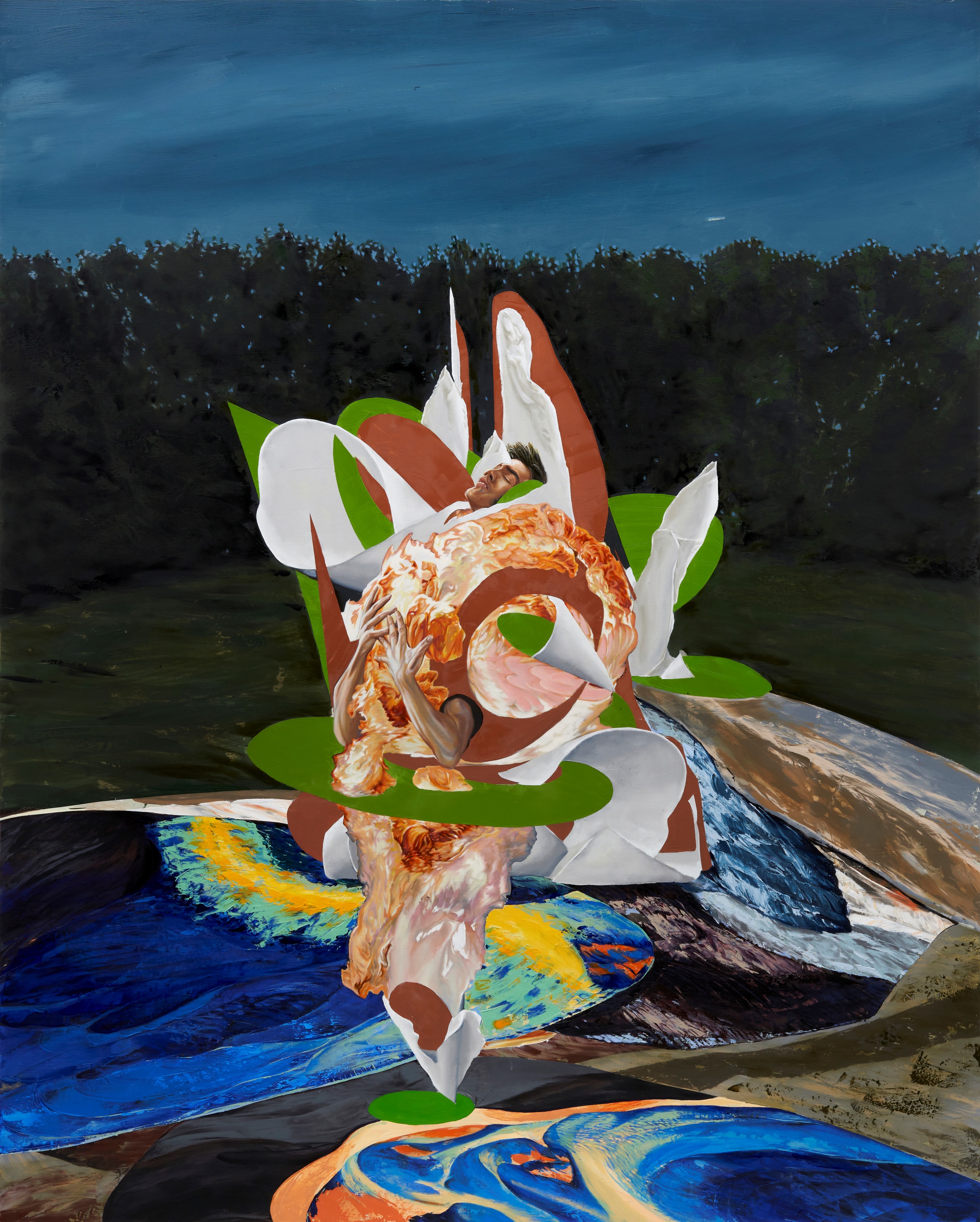
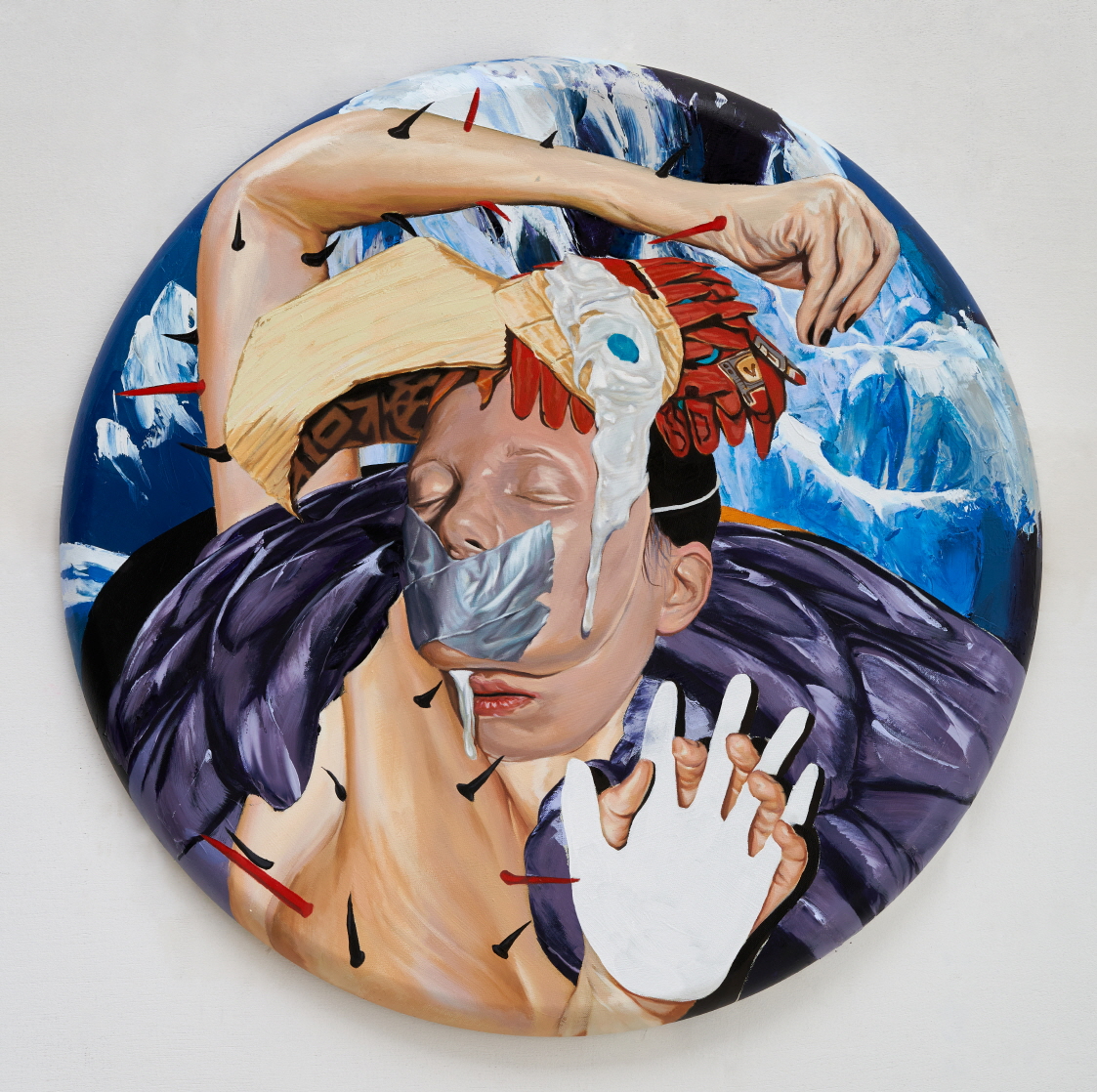
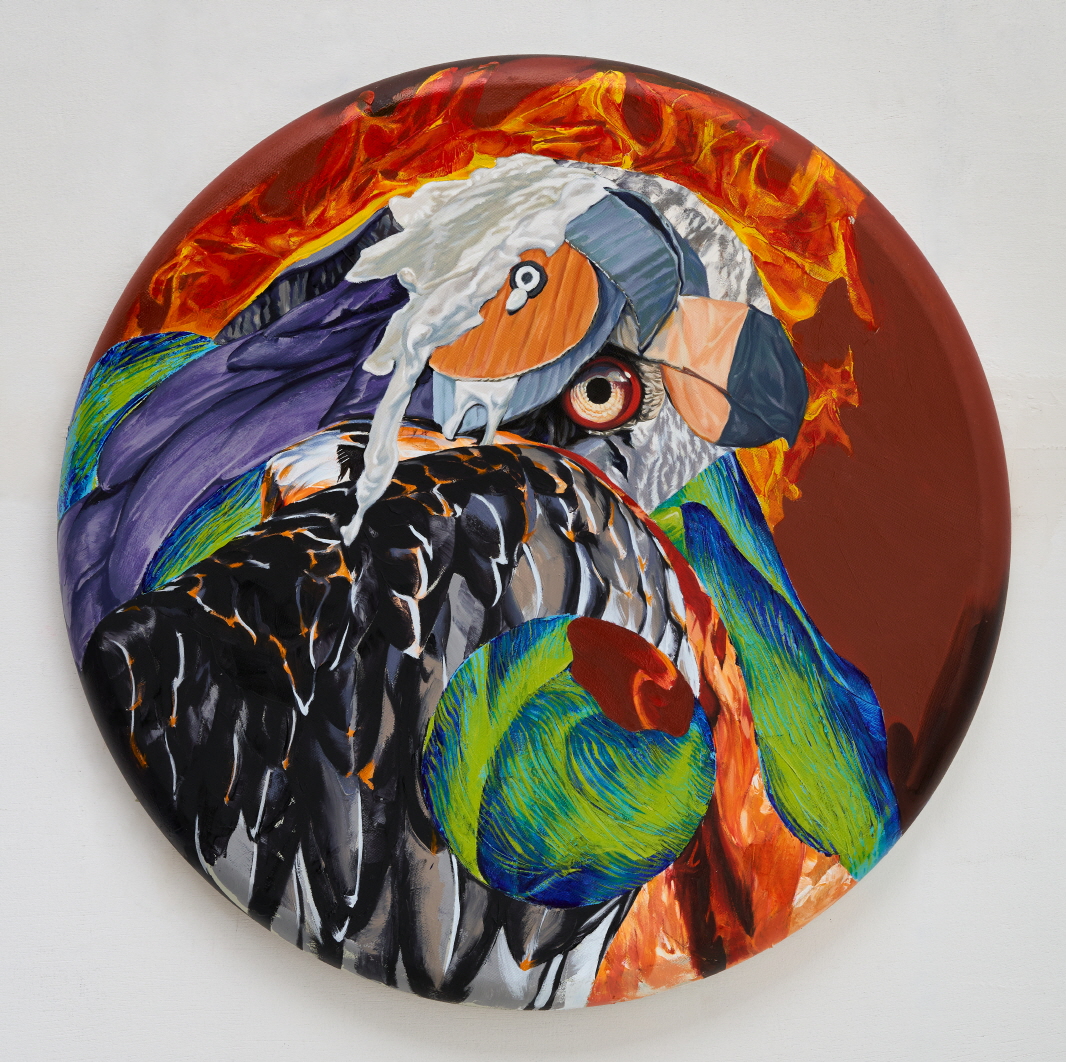
Park Jung Hyuk’s third painting series, ‘Park’s Land’, unfolds around the idea of “transformation.” When beginning this body of work, the artist was interested in exploring a sense of possibility, and transformation became the theme through which that notion could be articulated. Here, transformation does not refer to a simple shift from A to B, as in familiar mythic or cinematic narratives.
Instead, it encompasses a broader spectrum of states—what something could become, how roles shift according to circumstance, and the latent conditions inherent within a subject.
Figures and forms in the paintings appear structurally dismantled, blurred, or distorted through layered brushwork. These visual disruptions are less about depicting physical change and more about revealing multiple potential states at once.
Ultimately, ‘Park’s Land’ considers the conditions that allow transformation to occur rather than the moment of change itself. Through overlapping imagery and fluid gestures, the series presents a world defined not by what is changing, but by what can change—an expanded terrain for the artist’s ongoing exploration of painterly imagination.