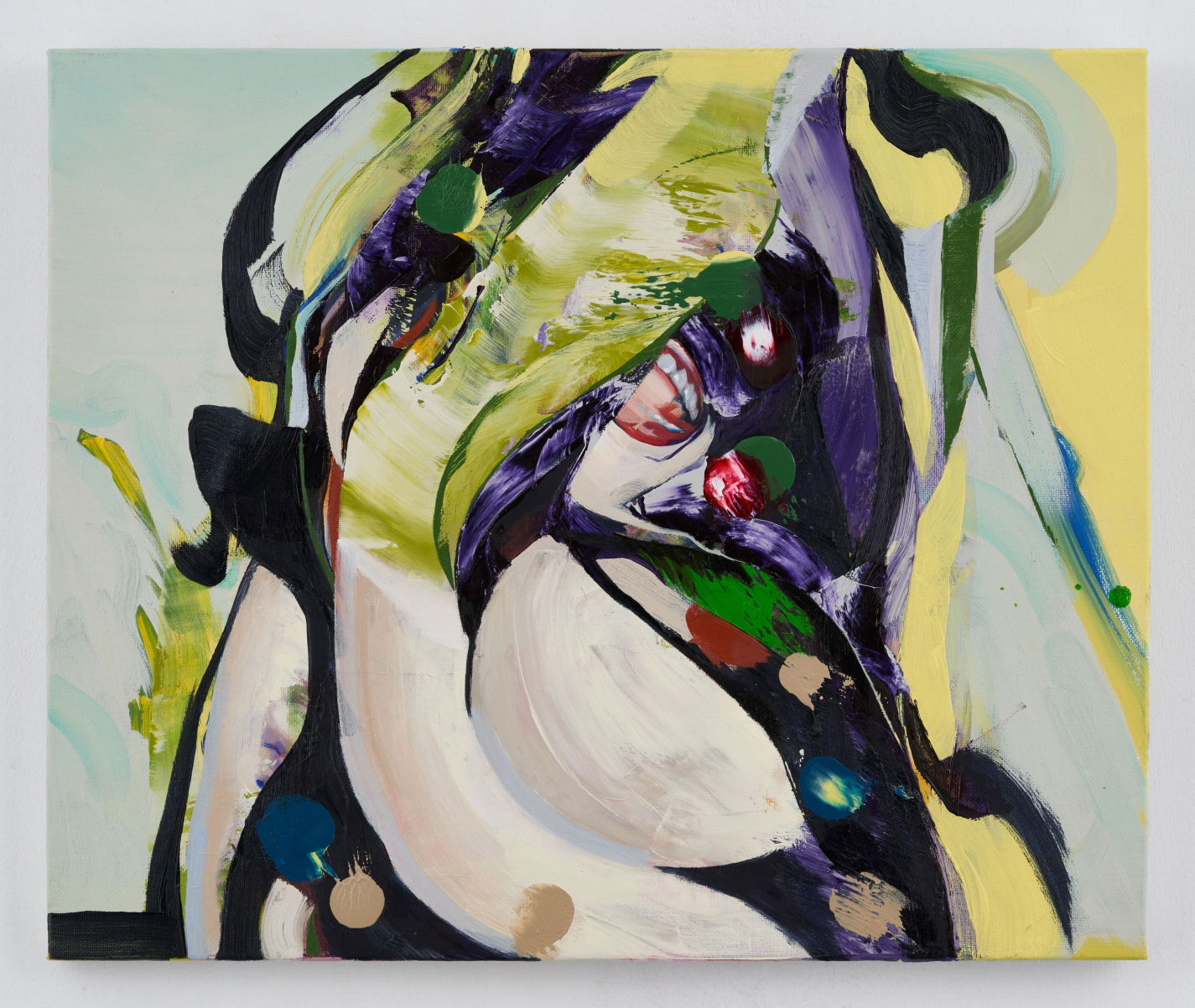
Park's Land 43-Erysichthon
2025 Oil on canvas 162.2 x 130.3 cm
Provenance
Artist Collection, 2026
Exhibitions
2025《Rebellious possibility》, Yeol Jeong Gallery, Seoul
About The Work
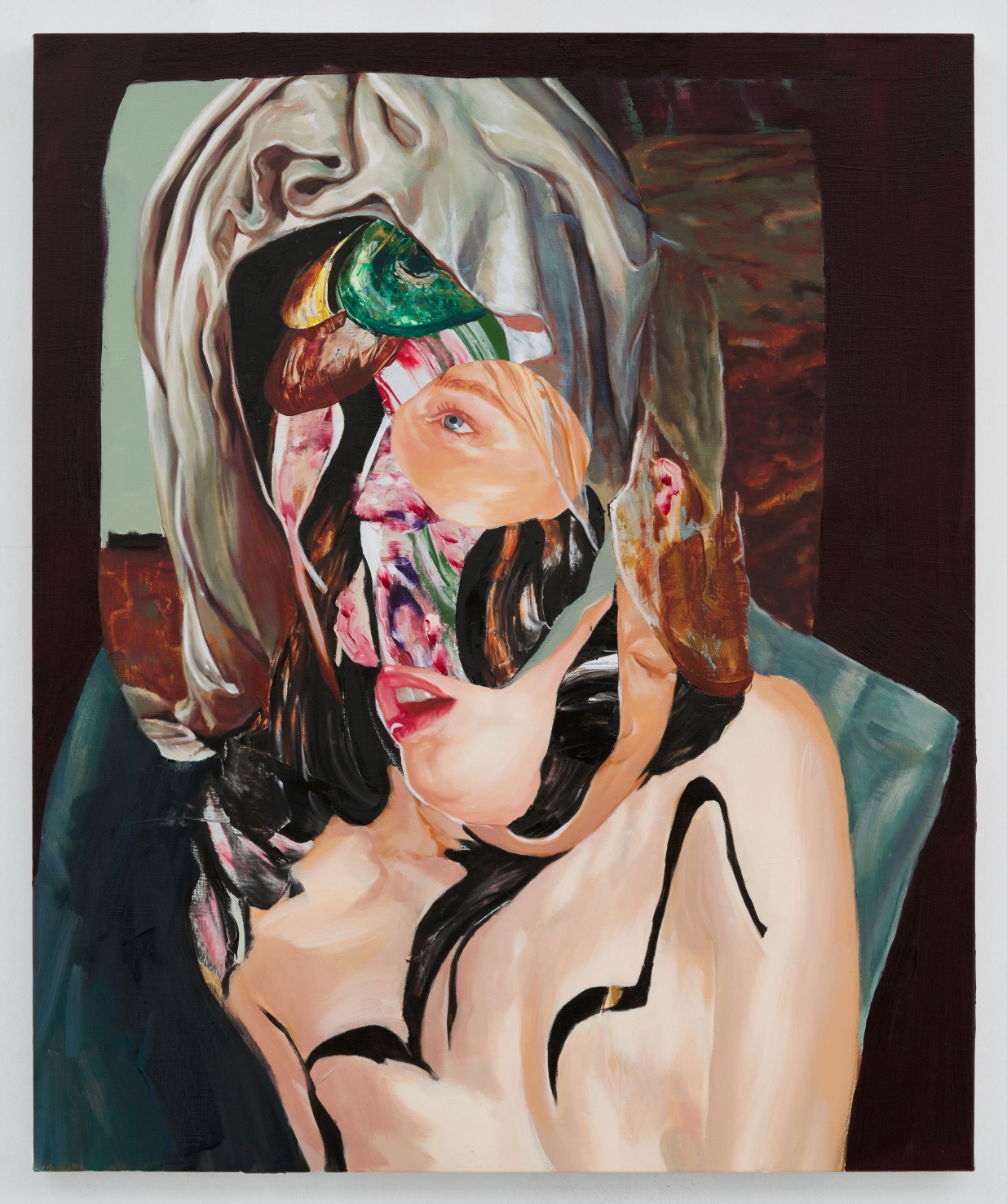
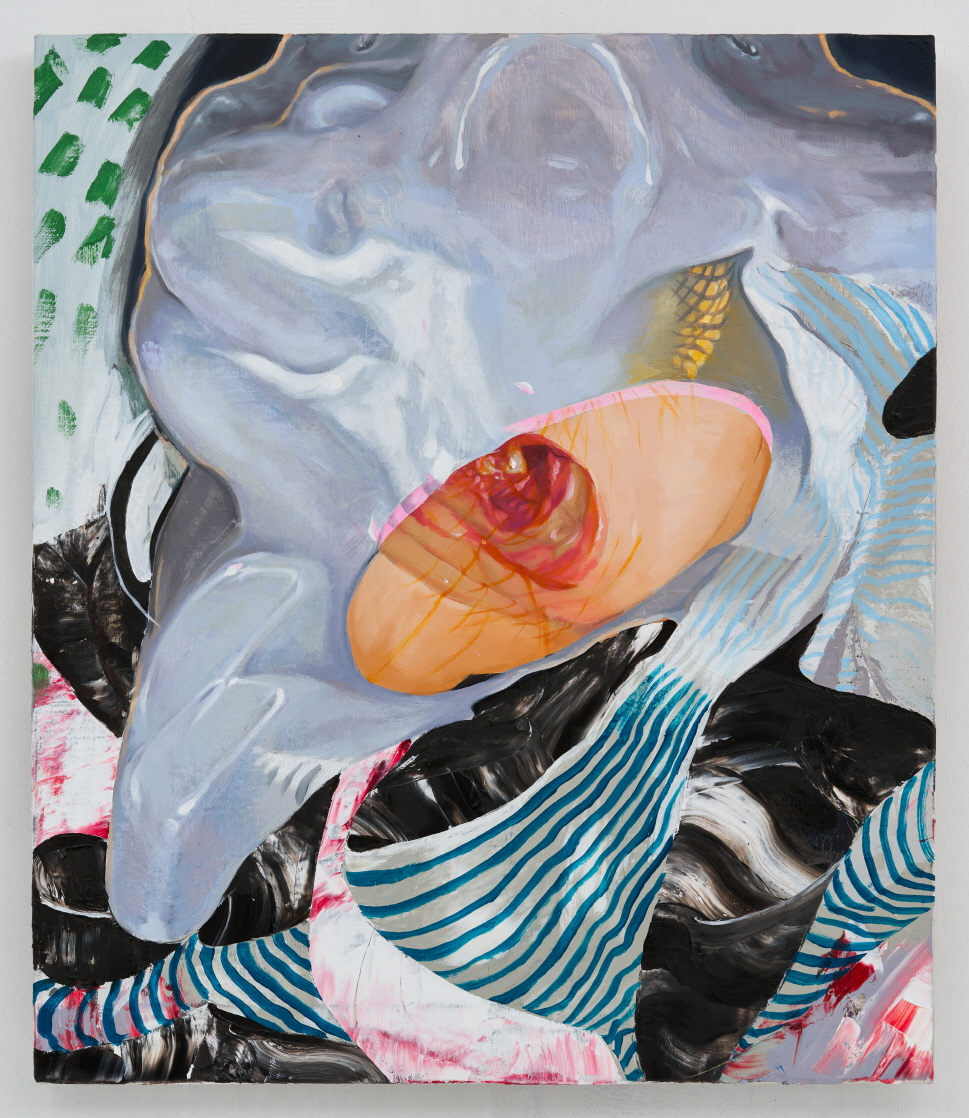
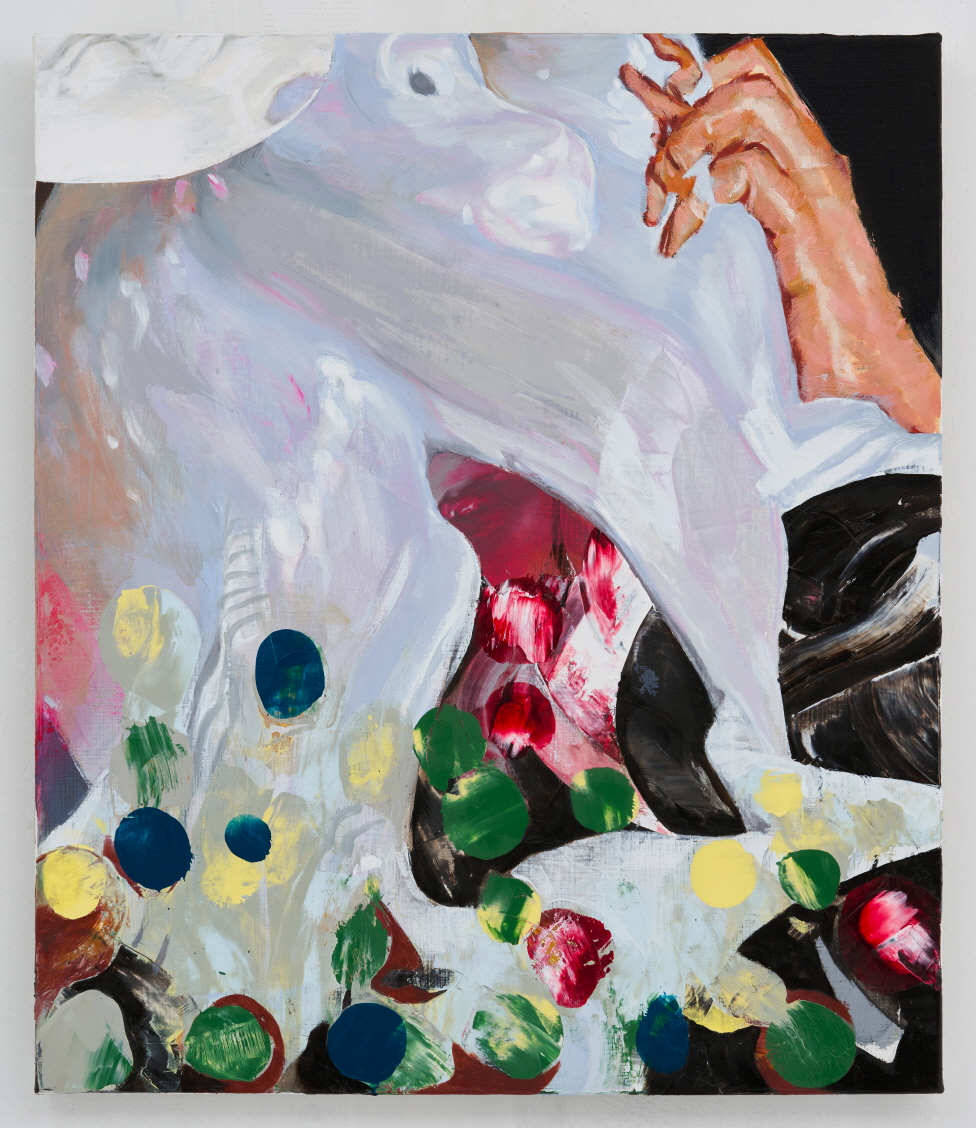
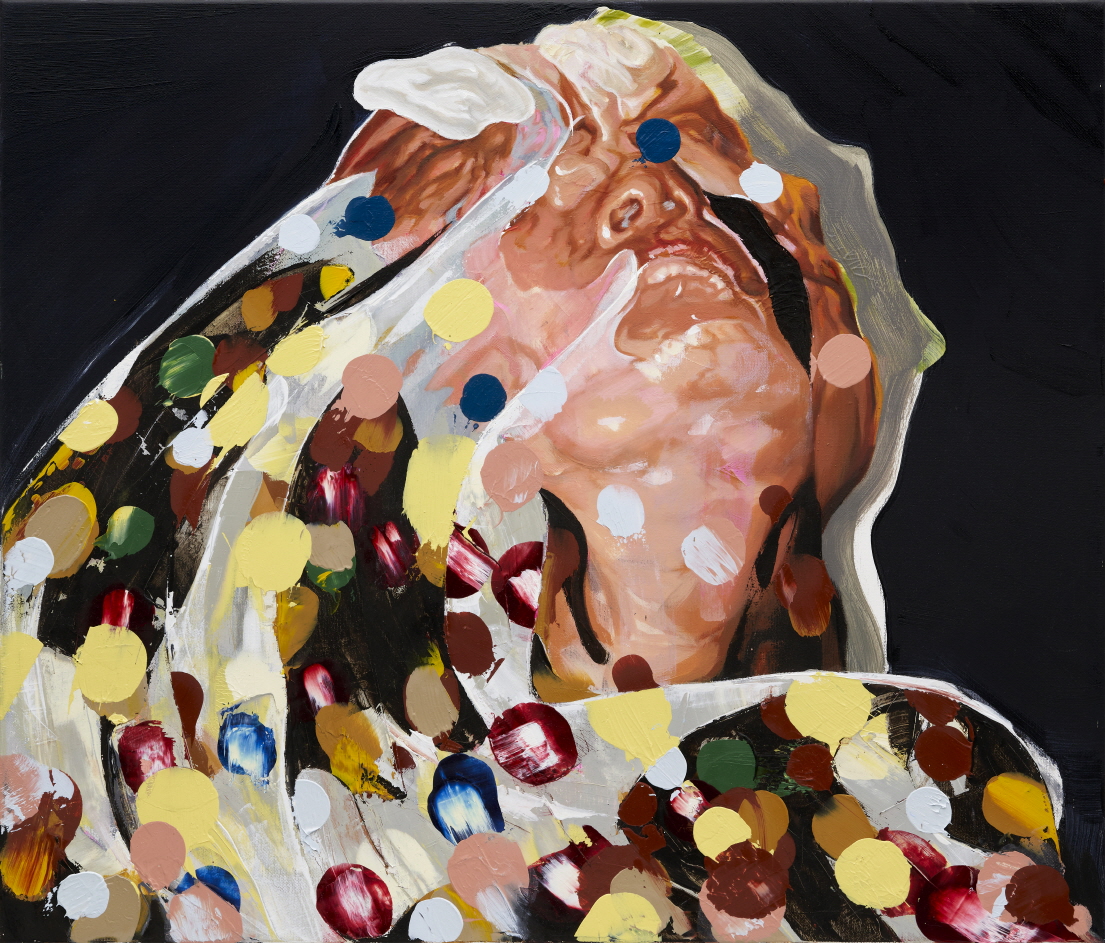
This work draws its motif from the episode of Erysichthon in Ovid’s “Metamorphoses”.
As punishment for cutting down a sacred tree that had been revealed through an oracle, Erysichthon is condemned to suffer from endless hunger, a fate in which he can never be satiated no matter how much he consumes. Eventually, he even comes to devour himself. The dentures, the empty ankles, and the garments floating in midair within the pictorial field symbolize both the traces left by the protagonist who has consumed everything and the absent body itself.
Although the physical body has vanished, its place remains only as fragments and residues, revealing the consequences of annihilation. By contrast, the two hands extending outward from the mirror suggest the final desire that has not entirely departed from reality, hinting at the lingering resonance of existence that persists even at the moment of disappearance.
The flames in the work function as a recurring symbol within the ‘Park’s Land’ series, signifying processes of change and transformation. Just as Erysichthon felled the sacred tree, the tree engulfed in fire simultaneously bears the marks of original sin and punishment. The fragmented terrain and the fluid, shifting landscape indicate that identity is not something fixed, but rather a process that is continuously dismantled and regenerated.
Through this work, I visually explored the way desire and punishment, annihilation and transformation, are woven into a single narrative. The story of Erysichthon is not merely a tragedy; it poses the question of how far desire can transform human existence. I consider this work to be one scene within the world of ‘Park’s Land’, revealing how existence is dismantled and reconstructed anew.
Park Jung Hyuk’s third painting series, ‘Park’s Land’, unfolds around the idea of “transformation.” When beginning this body of work, the artist was interested in exploring a sense of possibility, and transformation became the theme through which that notion could be articulated. Here, transformation does not refer to a simple shift from A to B, as in familiar mythic or cinematic narratives.
Instead, it encompasses a broader spectrum of states—what something could become, how roles shift according to circumstance, and the latent conditions inherent within a subject.
Figures and forms in the paintings appear structurally dismantled, blurred, or distorted through layered brushwork. These visual disruptions are less about depicting physical change and more about revealing multiple potential states at once.
Ultimately, ‘Park’s Land’ considers the conditions that allow transformation to occur rather than the moment of change itself. Through overlapping imagery and fluid gestures, the series presents a world defined not by what is changing, but by what can change—an expanded terrain for the artist’s ongoing exploration of painterly imagination.