Park's Land 24-Hermaphroditus, The Lake of That Day
2022 Oil on canvas 193.3 x 130.3 cm
Provenance
Artist Collection, 2026
Exhibitions
2025《Rebellious possibility》, Yeol Jeong Gallery, Seoul
2024《When Ero·Gro·Nonsense Combines Nonlinearly – Episode 1》, Museum1, Busan
2023《When Ero·Gro·Nonsense Combines Nonlinearly》, Arting Gallery, Seoul
About The Work
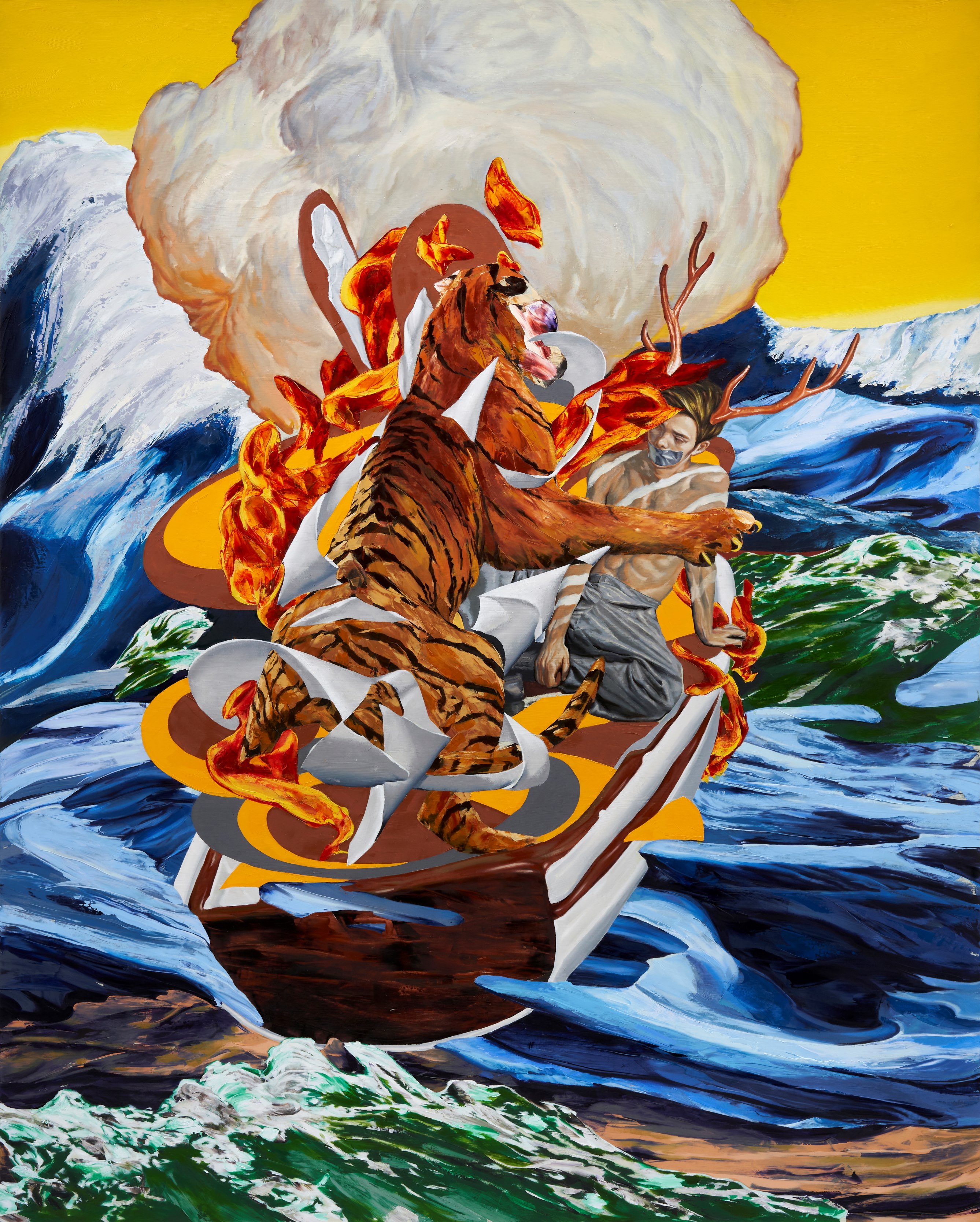
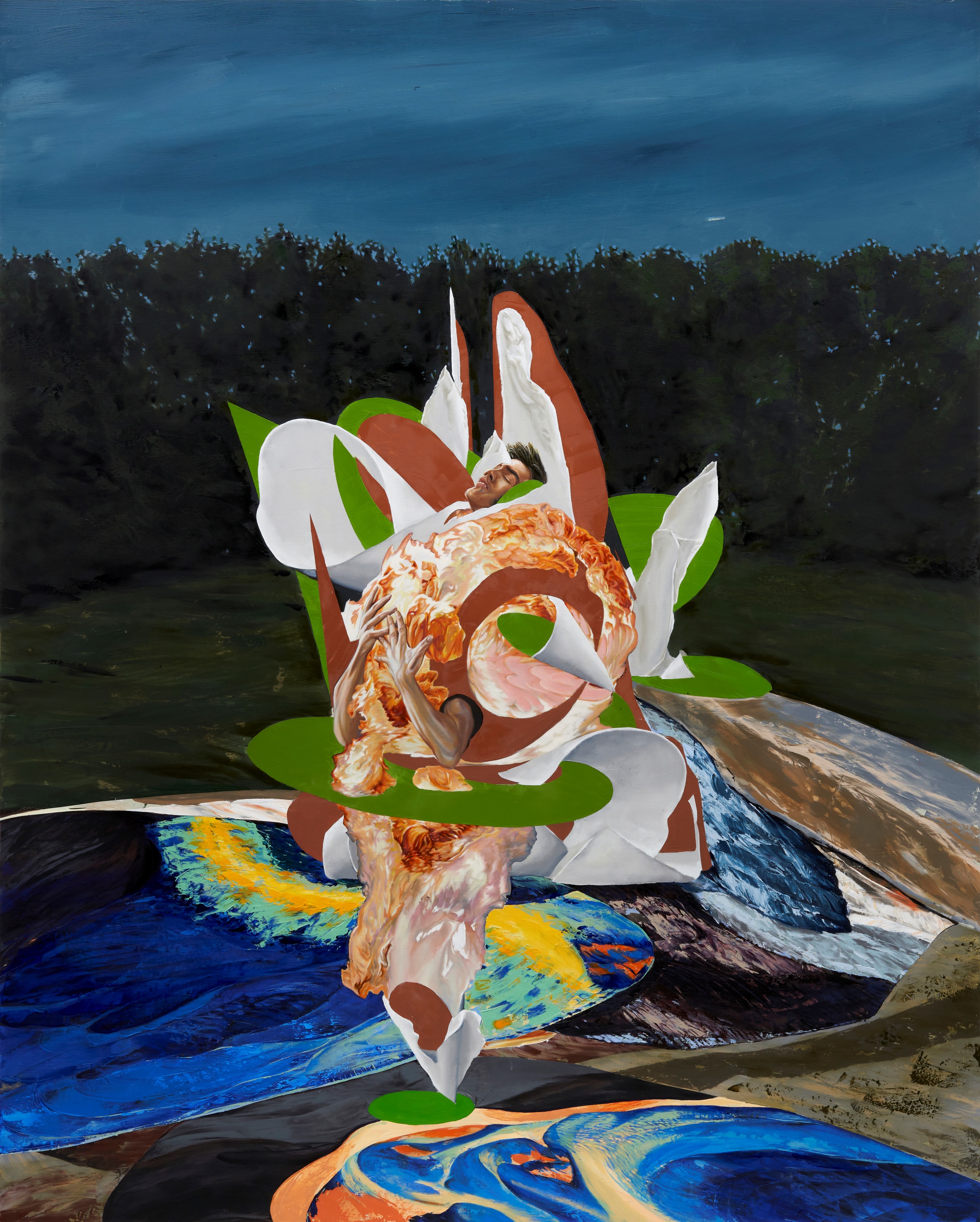
This work draws its motif from the myth of Hermaphroditus in Ovid’s “Metamorphoses”. The desire to become one body in the name of eternal love ultimately resolves not into love, but into a curse. Rather than reenacting the moment in which two beings fuse into a single body, this work explores the process of ‘becoming’—a state in which the boundary between self and other begins to blur.
The interpenetrating bodies do not converge into a unified identity. Instead, they remain in an intermediate state, dissolving and entangling as they transition toward a new form of existence. What emerges is not a completed figure, but a body in flux—suspended between separation and fusion.
The rippling surface and reflected layers of color evoke the lake of that day, suggesting that the site of the mythological event functions not merely as a backdrop, but as a material surface saturated with memory and transformation. The collage-like fragmentation of the image further reveals how time and events do not merge into a single coherent layer, but are instead reassembled through fragments and afterimages.
Through this work, I seek to show that myth is not a closed narrative, but an ongoing existential process—one in which the boundaries between self and other are destabilized and continually displaced into other bodies. As with the recurring scenes of transformation in the ‘Park’s Land’ series, this work remains as a moment of transition, one that passes through disintegration and recomposition in search of new possibilities of being.
Park Jung Hyuk’s third painting series, ‘Park’s Land’, unfolds around the idea of “transformation.” When beginning this body of work, the artist was interested in exploring a sense of possibility, and transformation became the theme through which that notion could be articulated. Here, transformation does not refer to a simple shift from A to B, as in familiar mythic or cinematic narratives.
Instead, it encompasses a broader spectrum of states—what something could become, how roles shift according to circumstance, and the latent conditions inherent within a subject.
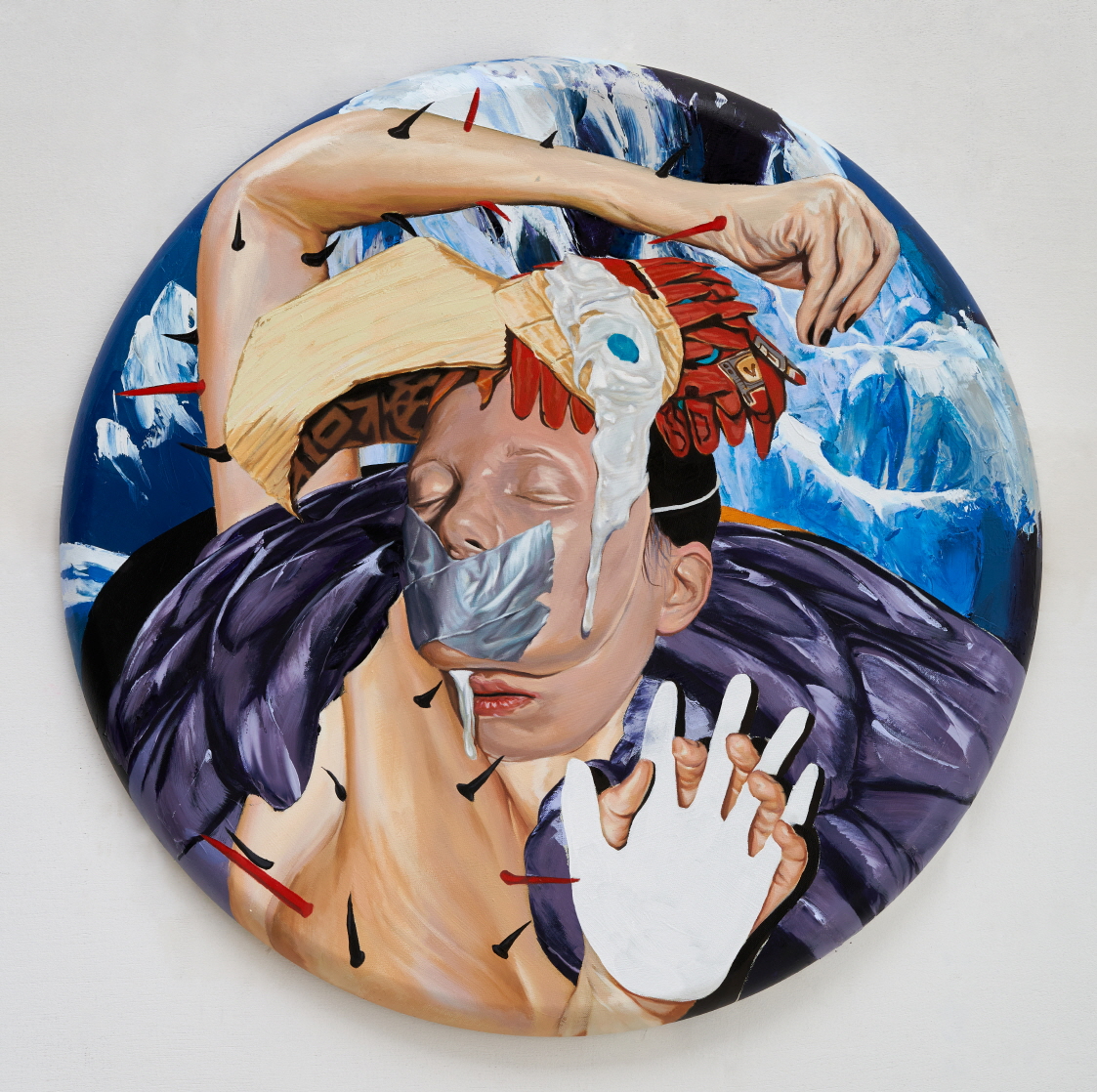
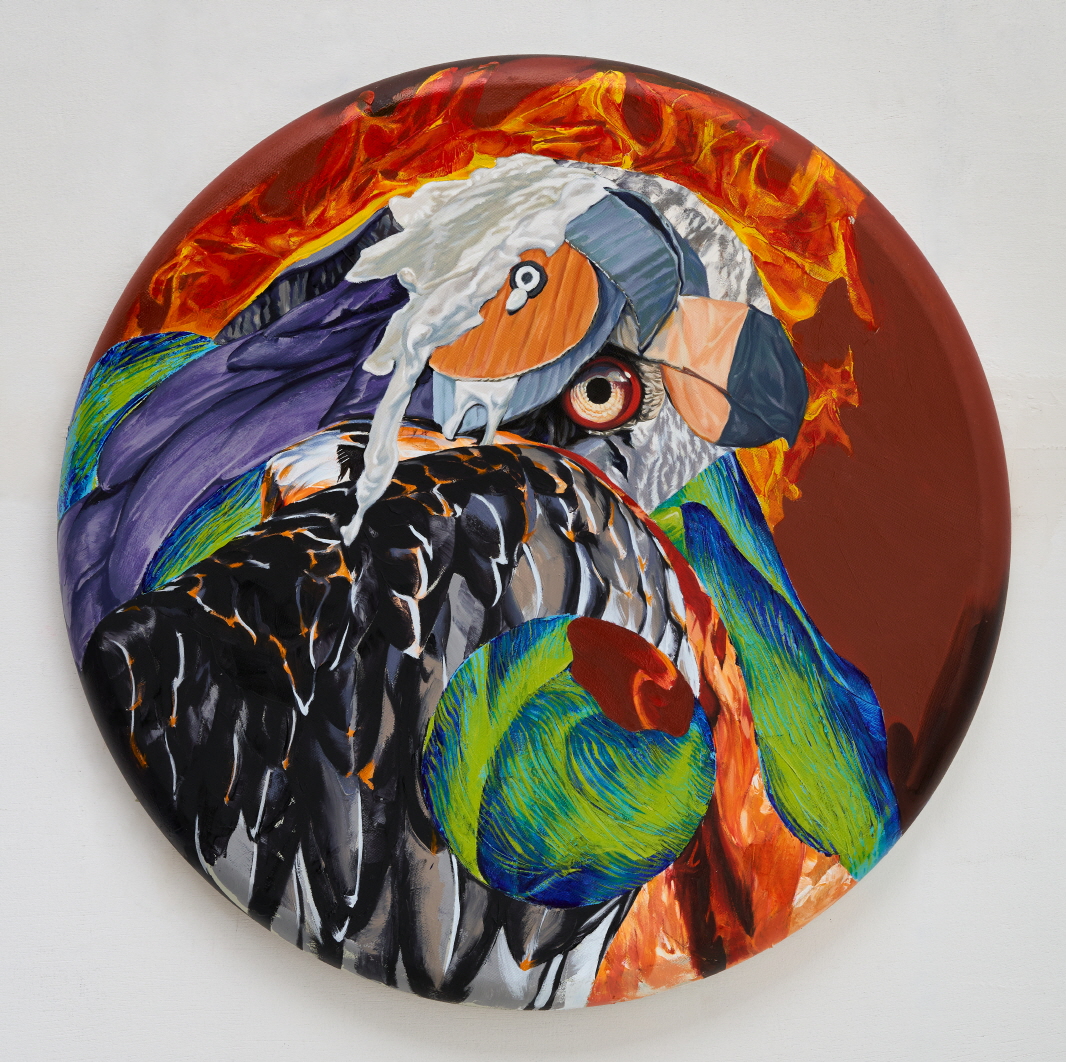
Figures and forms in the paintings appear structurally dismantled, blurred, or distorted through layered brushwork. These visual disruptions are less about depicting physical change and more about revealing multiple potential states at once.
Ultimately, ‘Park’s Land’ considers the conditions that allow transformation to occur rather than the moment of change itself. Through overlapping imagery and fluid gestures, the series presents a world defined not by what is changing, but by what can change—an expanded terrain for the artist’s ongoing exploration of painterly imagination.